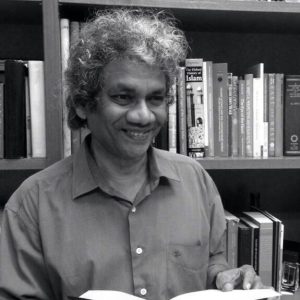
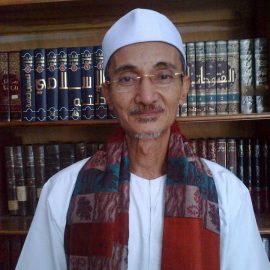
 Dr. Baharuddin Ahmad. M.A., Ph.D. (Temple), Distinguished Fellow, Muslim World Research Centre.
Special Lecture 1
 Osman Bakar, a doctorate in Islamic philosophy from Temple University, Philadelphia (USA) is currently Holder of Al-Ghazali Chair of Epistemology and Civilizational Studies and Renewal at the International Institute of Islamic Thought and Civilization (ISTAC), International Islamic University Malaysia (IIUM). He is also Emeritus Professor in Philosophy of Science at University of Malaya. He was formerly Distinguished Professor and Director of Sultan Omar ‘Ali Saifuddien Centre for Islamic Studies (SOASCIS), Universiti Brunei Darussalam. Dr Osman was also formerly Malaysia Chair of Islam in Southeast Asia at the Prince Talal al-Waleed Center for Muslim-Christian Understanding, Georgetown University, Washington DC, and Deputy Vice Chancellor (Academic and Research) at University of Malaya. Dr Osman is author and editor of 40 books and more than 300 articles on various aspects of Islamic thought and civilization, particularly Islamic science and philosophy in which he is a leading authority. His most well-known books are Classification of Knowledge in Islam (1992) and Tawhid and Science (1992). His latest books are titled Al-Farabi: Life, Works and Significance (2018) (new second edition) and Colonialism in the Malay Archipelago: Civilizational Encounters (co-editor) (2020). He has been named among the 500 most influential Muslims in the world since 2009. He was made a Dato’ in 1994 by HRH Sultan of Pahang and a Datuk by HM the King of Malaysia in 2000.
Special Lecture 2
 KH. Husein Muhammad is one of the few male scholars who sparked critical thoughts based on religious texts and yellow books as an effort to defend women’s rights and dissect the establishment of unequal relationships. Other feminist figures with like-mindedness include: Lies Marcoes, Wardah Hafidz, Masdar F Mas’udi, Margot Badran, Asma Barlas, Amina Wadud, Fatima Mernissi, Lois Lamya al-Faruqi.There are about 10 more works that have been written by Buya Husein. One of his books that is widely used as a reference for women activists is “Fiqh Perempuan, Refleksi Kyai atas Wacana Agama dan Gender” (Women’s Fiqh, Islamic teacher’s Reflections on Religious and Gender Discourses). His other works are “ Islam Agama Ramah Perempuan”(Islamic Religion Friendly to Women), “Ijtihad Kiyai Husein, Upaya Membangun Keadilan Gender”(Ijtihad Kiyai Husein, Efforts to Build Gender Justice), “Dawrah Fiqh Perempuan” (training module), “Figh Seksualitas” (Fiqh of Sexuality), “Fiqh HIV/ AIDS” ( Fiqh of HIV / AIDS), “Mengaji Pluralisme Kepada Maha Guru Pencerahan ” (Studies Pluralism to Supreme Teachers. Enlightenment),” Sang Zahid, Mengarungi Sufisme Gus Dur” ( The Zahid, Navigating Gus Dur‘s Sufism),” Menyusuri Jalan Cahaya” (Along the Path of Light ), and others.
Special Lecture 3
Special Lecture 4

Alexander Knysh is Professor of Islamic Studies at the University of Michigan and Director of an Islamic studies program at the St. Petersburg State University, Russia. His academic interests include Sufism, Qur’anic studies, the history of Muslim theological, philosophical and juridical thought, and modern Islamic/Islamist movements in comparative perspective.
He has numerous publications on these subjects, including twelve books. His latest books are Islam in Historical Perspective, 2 nd edition (New York and London: Routledge, 2017), Sufism: A New History of Islamic Mysticism (Princeton and Oxford: Princeton University Press, 2017), Sufi Cosmology (co-edited with Christian Lange; Leiden and Boston: E.J. Brill 2022), and Sufism after the USSR (in Russian, co-edited with Igor Pankov and Sergei Abashin; Moscow and St. Petersburg: Marjani Foundation and al-Maqam, 2022).
Alexander Knysh serves as sectional editor for “Sufism” of the Encyclopedia of Islam, Third Edition (E.J. Brill) and as Executive Editor of the E.J. Brill Handbooks of Islamic Mysticism book series. He lives in Ann Arbor, Michigan.
Special Lecture 5
 Mehdi Aminrazavi (born September 22, 1957) is an Iranian scholar of philosophy and mysticism. He is the Kurt Leidecker Chair in Asian Studies and a professor of philosophy and religion as well as director of the Center for Middle Eastern Studies Program at the University of Mary Washington. Aminrazavi is a member of a number of prestigious national and international philosophical and religious organizations including the American Academy of Religion, the American Philosophical Association and the Middle Eastern Society of America. Some of his notable works include: Philosophy, Religion and the Question of Intolerance (1997) Suhrawardi and the School of Illumination (1997)Philosophy, Religion, and the Question of Intolerance (1997) with David Ambuel An Anthology of Philosophy in Persia with Seyyed Hossein Nasr The Islamic Intellectual Tradition in Persia (1996) with Seyyed Hossein Nasr The Wine Of Wisdom: The Life, Work, And The Legacy Of Omar Khayyam (2005) Islamic Philosophy & Theology: An Online Textbook for Colleges (2010)
Special Lecture 6
Peter Adamson’s primary areas of interest are late ancient philosophy and Arabic philosophy. His two monographs deal with the Arabic version of Plotinus, the so-called “Theology of Aristotle,” and with al-Kindi (d. after 870 AD). He has devoted articles to several figures of the Greek tradition: Aristotle, Plotinus, and Porphyry; and numerous philosophers of the Arabic tradition, including al-Kindi, Abu Bakr al-Razi, Yahya Ibn ‘Adi, Miskawayh, Avicenna, and Averroes. He has also edited several books including, most recently, “In the Age of Averroes” published by the Warburg Institute. In 2012 Prof Adamson moved to the LMU from King’s College London, which is the home of a research project he oversees, on “Natural Philosophy in the Islamic World,” funded by the Leverhulme Trust. He is also the host of the History of Philosophy podcast.
Professor Adamson holds a joint appointment with the Ludwig Maximilian University of Munich. During 2012-13, he will be at King’s in the Spring term for a research seminar on Late Ancient
Special Lecture 7
 He was born on May 05, 1977 in Ceyhan, Adana, Turkey. He completed his primary, secondary and high school education in his hometown. He was admitted to the Faculty of Divinity of Selçuk University in Konya in 1994 and graduated from there in 1999. In the same year, he was admitted to the master’s program of Sufi Studies in the Social Sciences Institute of Selçuk University. He was appointed as Research Assistant in the same year in the same institute. He earned his MA degree in 2001 with his dissertation entitled “Wearing and Investing Khirqa in Sufi Tradition.” In the same year, he was admitted to the doctoral program of Islamic Philosophy in the same institute. He earned his PhD degree in 2005 with his dissertation entitled “Mystical Symbolism in Ibn Arabi.”
Some of his works include Suhrawardi’s Criticism of Ibn Sina, Mystical Symbolism in Ibn Arabi, the Turkish translation of Shihab al-Din Suhrawardi’s Hikmat al-Ishraq, the Turkish translation of Shihabaddin Suhrawardi’s Futuvvatnama, the Turkish translation of Abdurrazzaq Kashani’s Tuḥfat al-Ikhwan fi Khaṣaiṣi’l-Fityan, the Turkish translation of Al Kitab Ul Tazkari of Muhyiddin Ibn Arabi, Contemporary Turkish Thought, Four Gates-Forty Stations: The Stages of Spiritual Journey, The Book of the Signposts of Right Guidance and the Creed of the God-Fearing: The Creed of Suhrawardi, Kitab al-Tawḥid: Rational Roots of Islamic Monotheistic Belief (the English translation of Maturidi’s Kitab al-Tawḥid).
Special Lecture 8
 Cyrus Ali Zargar, Ph.D. is the Endowed Al-Ghazali Distinguished Professor in Islamic Studies. He earned his Ph.D. from the University of California, Berkeley in Near Eastern Studies in 2008. Dr. Zargar’s research interests include Classical Sufism, Islamic Philosophy, Arabic and Persian Sufi Literature, and Ethics in Literature and Film.
Dr. Zargar is currently completing a book titled Religion of Love: Farīd al-Dīn ʿAṭṭār (d. 1221) and the Sufi Tradition for the Islamic Texts Society. This monograph considers space, time, and praxis in the Persian Sufi poetry of ʿAṭṭār, focusing on the development of sacred symbols. His most recent book, The Polished Mirror: Storytelling and the Pursuit of Virtue in Islamic Philosophy and Sufism, was published in December of 2017.
Special Lecture 9
 At Haverford College (BA), then the University of Pennsylvania (MA), then the University of South Carolina (PhD), Eric Winkel undertook eclectic studies, mostly religion at first, focusing on spiritual matters, then later including political science, and numerous languages to enable study of religious and spiritual texts (Sanskrit, Greek, Coptic, Tamil, Arabic, others, besides French and German). His book “Mysteries of Purity, Ibn al-‘Arabî’s asrâr al-țahârah” (Notre Dame, 1995) was Chapter 68 of the Futuhat al-Makkiyya. While Senior Research Fellow at the Institute of Advanced Islamic Studies in Malaysia, he explored how the concepts of the “new sciences” opened obscure and difficult passages of the Futuhat.
Having studied Ibn Arabi’s Futuhat al-Makkiyya for over twenty-five years, Eric Winkel is now in the midst of an eleven-year project to produce the first complete translation of this work. For more information see links below to The Futūḥāt Project
Special Lecture 10
 Muhammad U. Faruque is the Inayat Malik Assistant Professor and a Taft Center Fellow at the University of Cincinnati. He also holds a Visiting Scholar position at Harvard University. His highly acclaimed book Sculpting the Self (University of Michigan Press, 2021) addresses “what it means to be human” in a secular, post-Enlightenment world by exploring notions of selfhood and subjectivity in Islamic and non-Islamic literatures, including modern philosophy and neuroscience. Dr. Faruque is the author of three books and over forty-five academic articles, which have appeared (or are forthcoming) in numerous peer-reviewed journals. He gives public lectures on a wide range of topics such as climate change, AI, ethics, and selfhood. He is also a recipient of numerous awards, grants, and fellowships, including the prestigious Templeton Foundation Global Philosophy of Religion grant and the Title IV Grant, U.S. Dept. of Education.
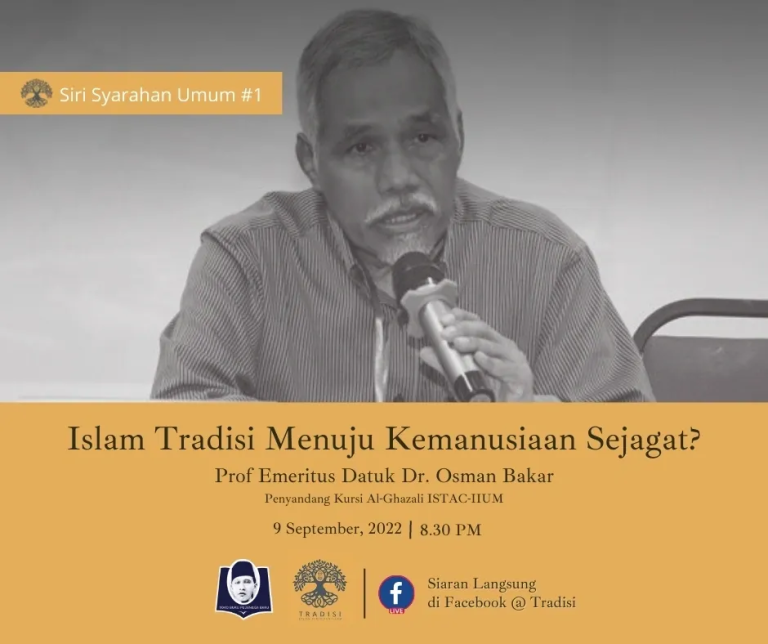
Special Lecture: Islam Tradisi Menuju Kemanusiaan Sejati?
Memahami pentingnya memupuk kesedaran kemanusiaan, toleransi dan kedamaian dalam wacana agama, maka Tradisi dengan kerjasama Toko Buku Pujangga Baru mengatur program syarahan umum ilmiah yang akan disampaikan oleh Prof Emeritus Datuk Dr. Osman Bakar dalam siri syarahan bulanan pada 9hb September 2022. Jemput semua.
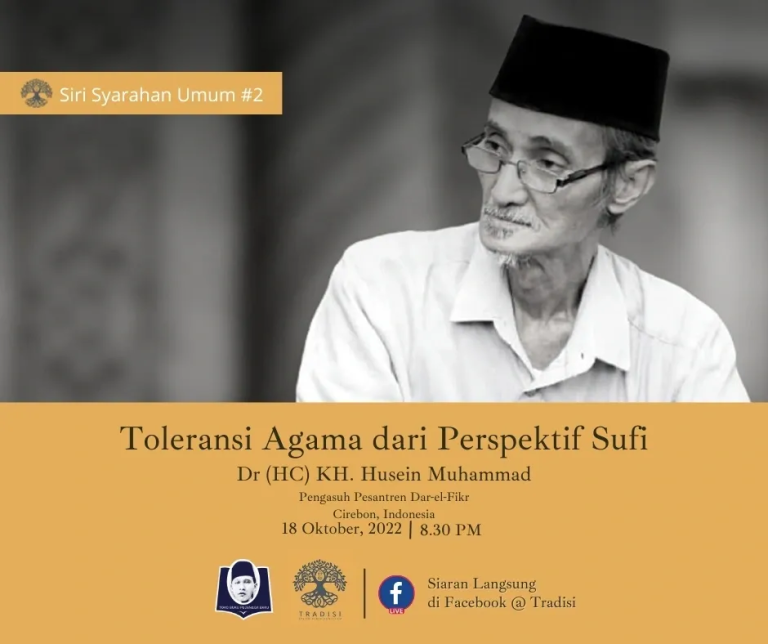
Special Lecture: Toleransi Agama dari Perspektif Sufi
Toleransi agama dalam tradisi Islam kukuh dan menjadi nilai yang disanjung dalam kehidupan para ulama dan para sufi terdahulu. Kita boleh menyemak lembaran sejarah peradaban Islam yang sangat menekankan nilai toleransi sekali gus belajar dari para sarjana Muslim dan kaum sufi seperti Imam Abu Hamid al-Ghazali, Ibn Rusyd al-Hafid, Syaikh Muhyiddin Ibn ‘Arabi, Husain Manshur al-Hallaj, dan Imam Fakhr al-Din al-Razi. Teks-teks keagamaan yang digarap dengan semangat nalar dan falsafah serta perenungan kontekstual yang harus diutamakan dalam hidup beragama hari ini. Tradisi dengan kerjasama Toko Buku Pujangga Baru mengatur program syarahan umum ilmiah yang kedua akan disampaikan oleh Dr Kiyai Husein Muhammad sebagai narasumber dalam siri syarahan bulanan pada 18hb Oktober 2022 di atas talian.
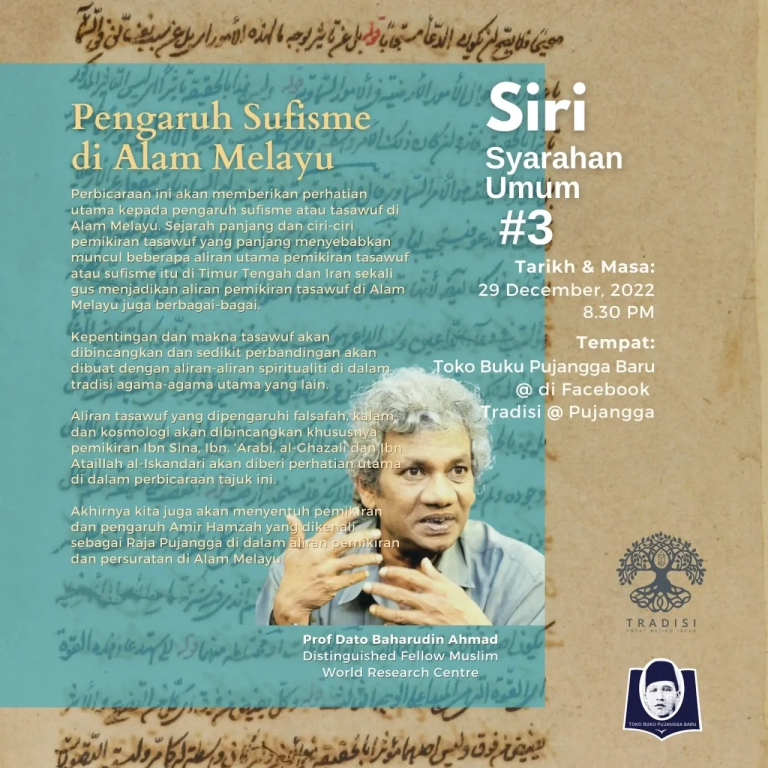
Special Lecture: Pengaruh Sufisme di Alam Melayu
Dalam siri syarahan umum ketiga TRADISI dengan Kerjasama Toko Buku Pujangga Baru membawakan Prof Baharudin Ahmad untuk mengupas pengaruh sufisme atau tasawuf di Alam Melayu dan aliran tasawuf yang dipengaruhi falsafah, kalam, kosmologi khususnya pemikiran Ibn Sina, Ibn ‘Arabi, al-Ghazali dan Ibn Ataillah al-Iskandari juga akan diberi perhatian utama di dalam perbicaraan tajuk ini. Jemput hadir ke kedai Toko Buku Pujangga Baru dan boleh ikuti siaran langsung di Fb live kami
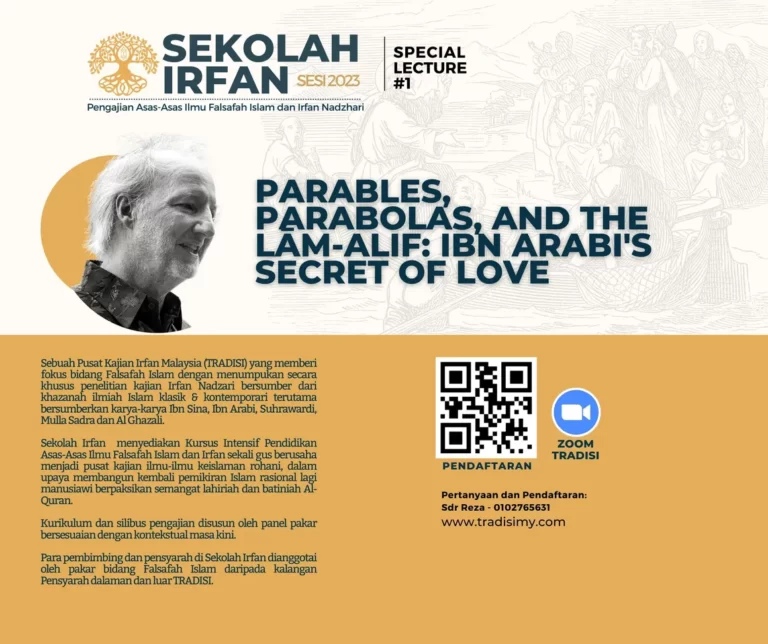
Parables, Parabolas, and the Lam Alif: Ibn Arabi's Secrets of Love
Muḥammad ibn al-ʿArabī is the transmitter of what is variously called (in the sacred lineages) the secret, the inheritance, and the sealing of the Light of Muḥammad ṣallallāhu ʿalayhi wasallam. His work, The Openings Revealed in Makkah, is the physical proof that he transmitted this inheritance successfully. At 10,000 pages in the original Arabic, the work has remained largely inaccessible, with only very brief commentaries over the centuries and very incomplete translations into other languages. We will consider the mathematics, geometry, and grammar of love the Futuhat al-Makkiyah. We welcome questions from the audience pertaining to the context of Ibn al-Arabi today.
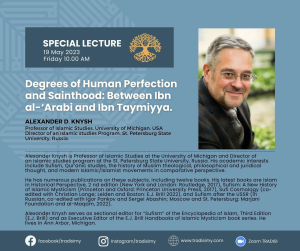
Special Lecture: Degrees of Human Perfection and Sainthood
Special Lecture (ONLINE) Degrees of Human Perfection and Sainthood: Between Ibn al-‘Arabi and Ibn Taymiyya. Speaker: Alexander Knysh Professor of Islamic Studies, University of Michigan. USA Director of an Islamic studies Program. St. Petersburg State University, Russia. 19 May 2023 Friday, 10.00 AM Degrees of Human Perfection and Sainthood: Between Ibn al-‘Arabi and Ibn Taymiyya: It deals with critical differences between Ibn ‘Arabi and Ibn Taymiiya in their respective visions of human perfection and sainthood, as well as the role of imagination as a means of understanding God, the world He created, the role of human beings in it.
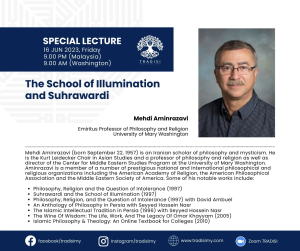
Special Lecture: The School of Illumination and Suhrawardi
Speaker: Mehdi Aminrazavi Emiritus Professor of Philosophy and Religion University of Mary Washington 16 JUN 2023, Friday 9.00 PM (Malaysia) 9.00 AM (Washington) Shihab al-Din Yahya Suhrawardi, also known as Shaikh al-ishraq or the Master of Illumination, lived in the sixth century AH / twelfth century CE. His thoughts form a consistent and coherent philosophical system, and a close study of his writings in Persian reveals a theory of knowledge generally called ‘Knowledge by Presence’. The elaborate web of myth and symbolism in Suhrawardi’s philosophy articulates his theory of knowledge, an important subject in the ishraqi school of thought. Suhrawardi, who claims first to have discovered the truth and then embarked on a path to find the rational basis of his experiential wisdom, represents a thinker who tried to reconcile rational discourse and inner purification.
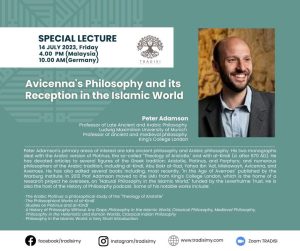
Special Lecture: Avicenna’s Philosophy
Speaker: Peter Adamson Professor of Late Ancient and Arabic Philosophy Ludwig Maximilian University of Munich Professor of ancient and medieval philosophy King’s College London 14 JULY 2023, Friday 4.00 PM (Malaysia) 10.00 AM (Germany) Ibn Sīnā (Avicenna, d. 1037 CE) was the most influential philosopher of the classical period in Islam. His impact on philosophy in Europe is well known, and there is plenty of research on the use of Avicennan ideas in figures like Aquinas. What is less commonly appreciated is that Ibn Sīnā had a massive and long-running impact on philosophy in the Islamic East. This talk will focus on the initial stages of that tradition, discussing reactions to Ibn Sīnā’s ideas beginning around the time of al-Ghazāli (d. 1111) and following the story up through the end of the 13th century.
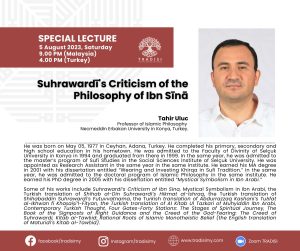
Special Lecture: Suhrawardī’s Criticism of the Philosophy of Ibn Sīnā
Speaker: Tahir Uluc Professor of Islamic Philosophy Necmeddin Erbakan University in Konya, Turkey. 5 August 2023, Saturday 9.00 PM (Malaysia) 4.00 PM (Turkey) The relationship between philosophy and mysticism has been a topic of debate for centuries. Some scholars argue that they are two distinct paths to knowledge, while others argue that they are complementary approaches. This topic will explore from what epistemological point of view Suhrawardī finds the Peripatetic philosophy inadequate and on which principles he criticizes it. It will also present an in-depth analysis of how Suhrawardī, who considers himself a philosopher and his work to be philosophical, transforms the Peripatetic philosophy into an instrument and prelude that would serve the Illuminative philosophy.
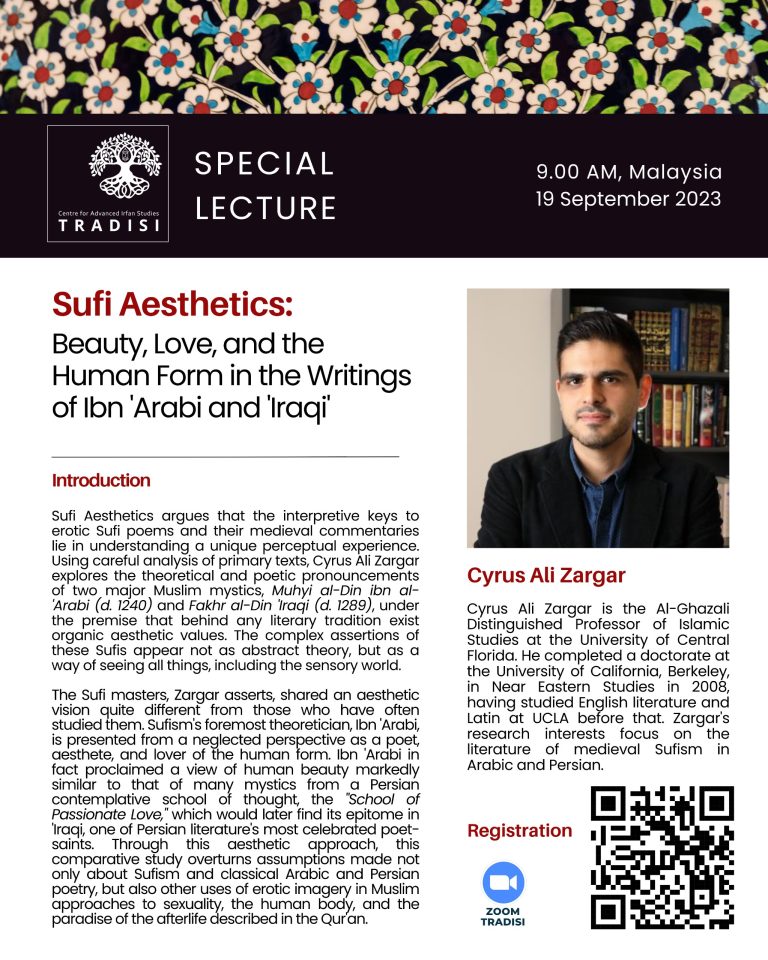
Sufi Aesthetics: Beauty, Love, and the Human Form in the Writings of Ibn 'Arabi and 'Iraqi'
Sufi Aesthetics argues that the interpretive keys to erotic Sufi poems and their medieval commentaries lie in understanding a unique perceptual experience. Using careful analysis of primary texts, Cyrus Ali Zargar explores the theoretical and poetic pronouncements of two major Muslim mystics, Muhyi al-Din ibn al-'Arabi (d. 1240) and Fakhr al-Din 'Iraqi (d. 1289), under the premise that behind any literary tradition exist organic aesthetic values. The complex assertions of these Sufis appear not as abstract theory, but as a way of seeing all things, including the sensory world. The Sufi masters, Zargar asserts, shared an aesthetic vision quite different from those who have often studied them. Sufism's foremost theoretician, Ibn 'Arabi, is presented from a neglected perspective as a poet, aesthete, and lover of the human form. Ibn 'Arabi in fact proclaimed a view of human beauty markedly similar to that of many mystics from a Persian contemplative school of thought, the "School of Passionate Love," which would later find its epitome in 'Iraqi, one of Persian literature's most celebrated poet-saints. Through this aesthetic approach, this comparative study overturns assumptions made not only about Sufism and classical Arabic and Persian poetry, but also other uses of erotic imagery in Muslim approaches to sexuality, the human body, and the paradise of the afterlife described in the Qur'an.
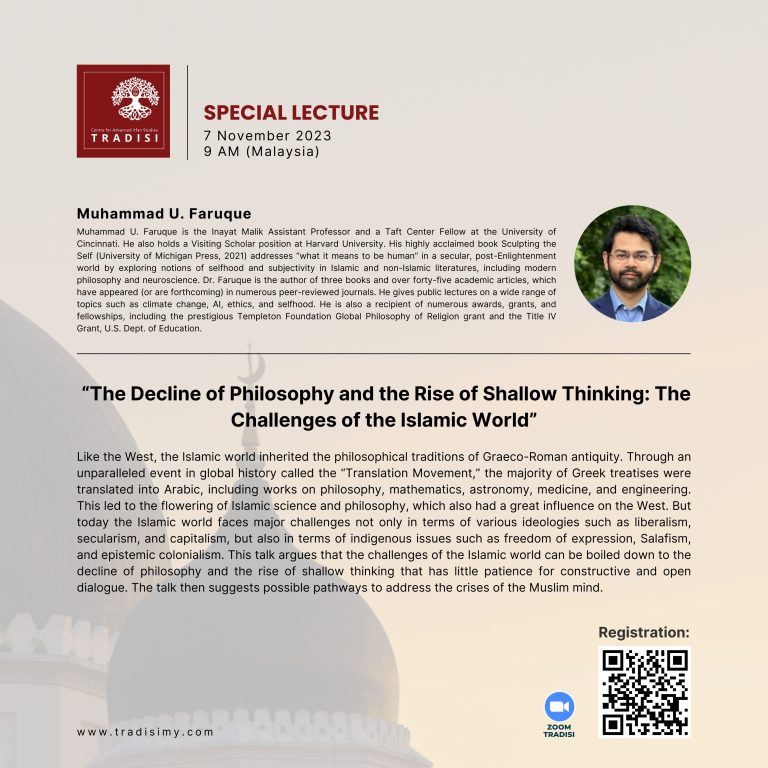
𝐓𝐡𝐞 𝐃𝐞𝐜𝐥𝐢𝐧𝐞 𝐨𝐟 𝐏𝐡𝐢𝐥𝐨𝐬𝐨𝐩𝐡𝐲 𝐚𝐧𝐝 𝐭𝐡𝐞 𝐑𝐢𝐬𝐞 𝐨𝐟 𝐒𝐡𝐚𝐥𝐥𝐨𝐰 𝐓𝐡𝐢𝐧𝐤𝐢𝐧𝐠: 𝐓𝐡𝐞 𝐂𝐡𝐚𝐥𝐥𝐞𝐧𝐠𝐞𝐬 𝐨𝐟 𝐭𝐡𝐞 𝐈𝐬𝐥𝐚𝐦𝐢𝐜 𝐖𝐨𝐫𝐥𝐝
Like the West, the Islamic world inherited the philosophical traditions of Graeco-Roman antiquity. Through an unparalleled event in global history called the “Translation Movement,” the majority of Greek treatises were translated into Arabic, including works on philosophy, mathematics, astronomy, medicine, and engineering. This led to the flowering of Islamic science and philosophy, which also had a great influence on the West. But today the Islamic world faces major challenges not only in terms of various ideologies such as liberalism, secularism, and capitalism, but also in terms of indigenous issues such as freedom of expression, Salafism, and epistemic colonialism. This talk argues that the challenges of the Islamic world can be boiled down to the decline of philosophy and the rise of shallow thinking that has little patience for constructive and open dialogue. The talk then suggests possible pathways to address the crises of the Muslim mind.